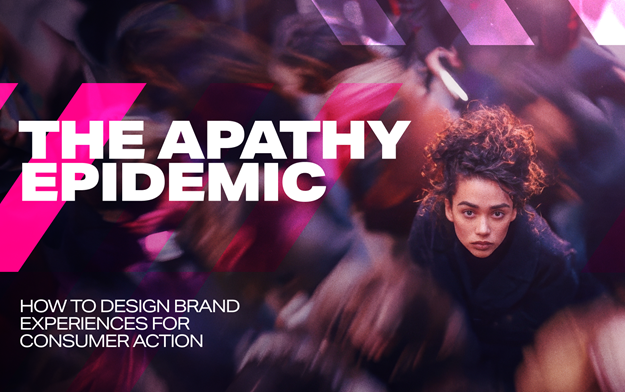
Only One in Four UK Adults Recall Live Brand Experiences, but 96% Take Action
Oct. 16, 2026
Just 26% of UK adults surveyed say they recall seeing or taking part in a live brand experience in the past 12 months. Yet among those who recall one, 96% report taking some form of action afterwards. The findings come from The Apathy Epidemic: How to design brand experiences for consumer action, a new report commissioned by the ZEAL Group and based on nationally representative research by Censuswide.
ZEAL describes The Apathy Epidemic as the challenge brands face in getting people to notice, remember and care enough to act. While recall was limited, the findings suggest that experiences which do register can make a strong impression: among those who recalled a live brand experience, 73%[1] rated it more memorable than other advertising or marketing they had seen from other brands.
The findings come as the Q3 2026 IPA Bellwether Report records the strongest upward revisions to event marketing budgets in nine quarters. The net balance rose to +15.1%, from +11.0% in Q2, meaning the proportion of companies increasing event budgets exceeded those reducing them by 15.1 percentage points. Against that backdrop, ZEAL’s research puts the spotlight on whether live brand experiences are being noticed, remembered and connected to the action a brand needs.
Conversations carry the experience beyond the event
Among people recalling an experience, the most common reported response was a conversation: 24% told someone about it in person or by phone. Some 16% shared something about the experience in a private messaging group such as WhatsApp. These findings suggest that measuring only public posts and online clicks could miss part of the response to a live experience.
One in five (20%) said they bought a product or service afterwards, and 18% tried one. Respondents could report multiple actions, so the figures are not additive.
Of those who took action, 91% said the experience influenced what they did to some degree: 35% said it had a great deal of influence, and 56% a fair amount. These are people’s own accounts of what they did and how much the experience influenced them; the research cannot prove that it caused those actions.
What respondents say encourages action
Personal relevance and the chance to try a product were the most commonly cited reasons for paying attention to or taking part in an experience (25% each). Among those who took action afterwards, 29% cited a discount or special offer as something that made them more likely to take the next step, while 29% cited being able to sample the product immediately and 29% being able to buy it immediately.
Among people recalling a recent experience, 81% said it made them more likely to consider the brand in future. Product interaction was also associated with a stronger response. Among people who recalled a recent experience, 53% of those who tried or used the product said the experience made them much more likely to consider the brand in the future, compared with 19% of those who said the product played only a peripheral role.
The report sets out seven principles for designing experiences around a defined consumer action, including making product interaction integral to the idea, simplifying the next step and measuring the intended outcome.
Tim Solano, Managing Director, ZEAL, said:
"Today's IPA Bellwether shows brands increasing budgets across PR, events and sales promotion. The opportunity is to connect the attention and conversation those activities generate with a clear reason to try, choose or buy, putting ROI firmly in focus. A busy or beautiful activation isn’t the outcome in itself. The question is whether it matters to the people who encounter it and gives them a natural next step. ZEAL Group’s heritage in retail and brand activation has taught us to think about the whole journey through to purchase. We call this ‘action-back’: starting with the action the brand needs, then designing backwards to connect the live experience with the product and the wider buying journey."
Action-back in practice
The report illustrates this approach through ZEAL’s TENA Men Dry Manuary campaign, which sought to make bladder weakness easier to discuss and encourage product trial and purchase.
At Harlequins’ Big Game 16 at Twickenham, the campaign’s alcohol-free Dry Inn Clubhouse gave men a setting to discuss the issue. Product sampling and coupons offered a next step, while placement in major retailers’ low- and no-alcohol aisles connected the campaign’s Dry January theme with opportunities to buy. Campaign reporting recorded a £600,000 year-on-year sales uplift over 12 weeks across the integrated campaign.
Related News
Crufts Appoints Tommy to Create new Campaign Platform for 2027
New platform will aim to connect Crufts with a new generation of dog lovers while remaining relevant to its loyal existing audience
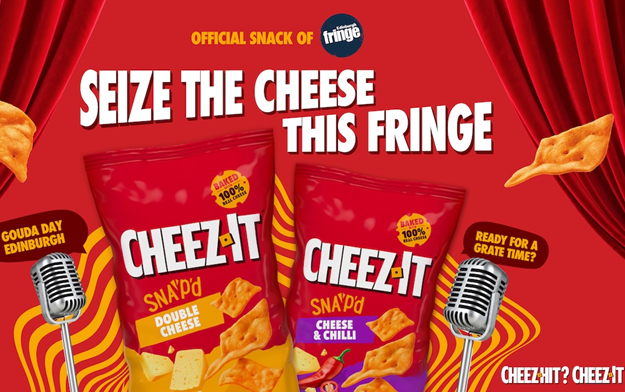
Cheez-It Invites Festival-Goers to "Seize the Cheese" with Edinburgh Fringe Takeover
Brand activation agency ZEAL turns Cheez-It into the Official Snack Partner of the Edinburgh Fringe with immersive sampling
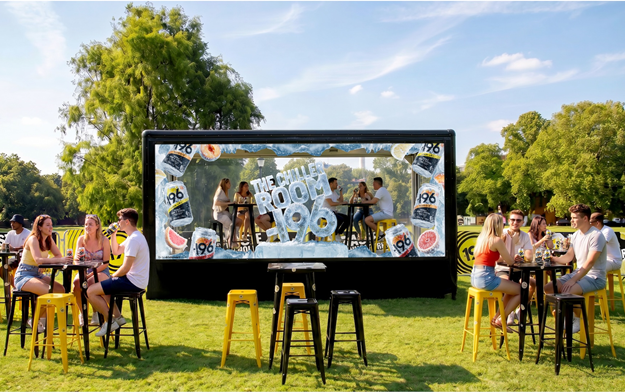
ZEAL Group Turns Down the Temperature for Minus 196 with The Chiller Room
ZEAL Creative, Joe Public and ZEAL X unite on consumer earned media activation for the Suntory vodka soda brand

Latest News
Oct. 16, 2026
Midnite Serves 1,000 Free Chicken Parmos to Boro Fans This Weekend
Earlier this month, Middlesbrough legends went head-to-head with current first-team players in a Parmo Cooking Challenge
Oct. 16, 2026
Mike Tyson Delivers a Wireless Wake-Up Call in New Boost Mobile Campaign
Created with production partner Little Big Engine, "What’s Your Plan?" turns Tyson’s infamous quote into a comedic challenge to rethink your wireless plan