
New Research Reveals Service Design's Biggest Blind Spot
Feb. 25, 2026
Emotional states of users have emerged as the most overlooked, yet most critical, factor in service design, according to new global research from Wipro’s experience innovation company, Designit.
Over a third (35%) of global design and experience professionals surveyed said emotional states are the most ignored aspect of service design, followed by invisible failure points (33%). Cross-channel consistency ranked lower at 21%, while just 10% pointed to execution incentives.
Nearly a year on from Designit’s research into context-aware systems, and just months after its study into AI-driven customer support, which identified gaps in empathy and contextual understanding in automated experiences, the latest findings suggest those issues may originate earlier than expected. These gaps extend beyond technology and data strategy into the foundations of service design itself.
As organisations continue to optimise services for efficiency, many still rely on static personas and rational journey mapping, approaches that struggle to account for how behaviour shifts under pressure, uncertainty or urgency.
Customers do not experience services in a neutral way; their reactions are shaped by emotion. Time pressure, anxiety and urgency influence how information is processed and decisions are made, yet service design often relies on structured customer journeys that fail to reflect those realities.
Madeline Kossakowski, executive experience design director at Designit, commented:
“The industry has become incredibly good at connecting systems and touchpoints, but connection doesn’t automatically create understanding. If we design primarily for efficiency, we risk scaling friction rather than reducing it. Our earlier research highlighted empathy gaps emerging in AI, and the importance of context-aware systems in customer support. What we’re now seeing is that those gaps originate much earlier, in the assumptions that shape how experiences are designed. Our Mindset Archetypes approach challenges organisations to move beyond basic demographic personas and design around the deeper drivers of behaviour: values, motivations and contextual pressures. When you understand that ‘why’, you can design services that are resilient, adaptive, and capable of building trust over time. If we don’t design for shifting emotions and mindsets at the service level, no amount of technology can compensate for that gap.”
Designit brings deep expertise across service design, customer experience, and digital transformation, having partnered with leading businesses including JFK Terminal 4, SL18 Tram for all - Sporveien, and Pandora to create human-centred experiences that bridge the gap between technology, systems and behavioural insight.
Related News

Kontur Appoints Designit to Lead Global Repositioning Ahead of Next Growth Phase
Kontūr, a global leader in subsurface intelligence technology, has brought Designit on board to reposition how the company communicates its value across international markets

Nine in Ten Say Businesses are Failing to Put People First in Employee Experience Transformation
The poll found that 58% identified ‘overlooked employee input’ as the biggest blind spot in employee experience (EX) transformation

Survey: World Cup 2030 Fan Experience Must Go Beyond the Stadium
Design experts urge organisers and brands to think beyond the stadium experience and create more connected physical and digital journeys for fans

Latest News
Oct. 20, 2026
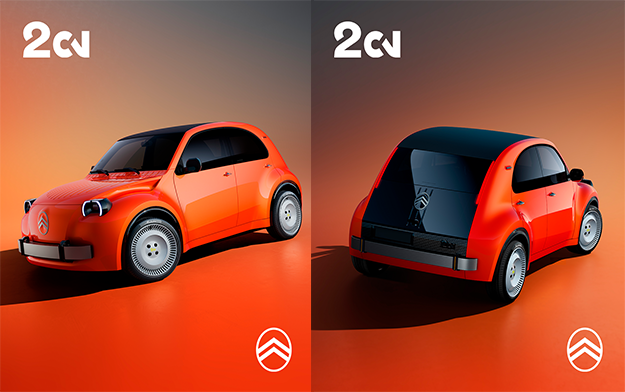
Citroen and BETC Paris Celebrate the Return of the 2 CV with a Landmark Campaign
In 2026, it makes a comeback, bringing electric mobility and everyday optimism within everyone's reach

Oct. 20, 2026
Lingokids Just Launched Spanish and Portuguese: Why Families Will Love It
Leading kids’ platform ramps up global ambition with first localized versions of its extensive games library