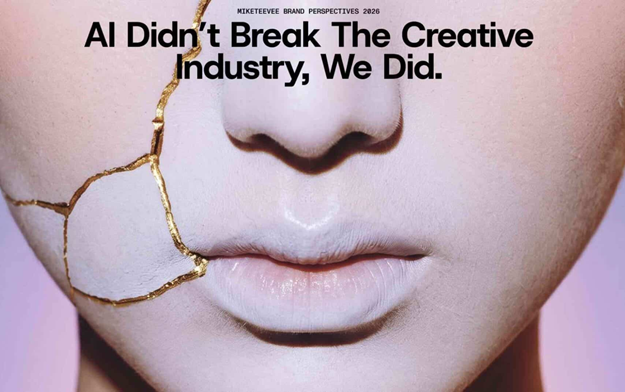
AI Didn't Break the Creative Industry. It Exposed what was Already Broken
Sep. 18, 2026
AI is often blamed for the homogenisation of creative work, the erosion of craft and the threat to jobs. But a new publication from creative production partner MikeTeevee argues that AI did not create these problems. It exposed and accelerated weaknesses that were already embedded in the creative industry.
That is the provocative premise of Brand Perspectives 2026, which draws on interviews with senior in-house creative and marketing leaders at brands including HelloFresh, Wayfair, DoorDash, Canva, Intuit, O2 and Verizon.
One of its central findings is that, as creative teams gain the ability to generate an almost limitless number of ideas, variations and assets, they are finding it harder to decide what is genuinely worth making.
James Hurst, Executive Creative Director at HelloFresh said:
“Some teams are suffering from real decision paralysis. because they can now create an almost infinite number of variations at almost zero cost and in zero time.”
Hurst also describes creatives losing conviction in their own thinking as ideas pass through more rounds of testing, input and consensus. Mike Pearson, Head of Creative & Promotions at Wayfair, raises a related concern: “In a world where everyone can create more with the same tools, and often with the same inputs, how do you stop everything looking the same?”
Brand Perspectives 2026 argues that the industry’s traditional creative filter was weakening long before AI became mainstream. The ability to generate widely, filter ruthlessly and commit to a strong idea is now under greater pressure because technology has made it cheaper and easier to avoid making a choice.
Ellen Utrecht, Founder of MikeTeevee said:
“The question for creative teams is no longer how many options they can produce. It’s how they decide which ideas deserve to exist. The leaders we spoke to are finding valuable uses for AI, but they’re also clear that speed and volume cannot replace taste, judgement or the confidence to make a choice.”
The publication also warns that using AI to eliminate junior roles could weaken the future creative leadership pipeline. Those roles are not simply about producing work; they are where people develop the taste, instinct and judgement that take years to build.
It also challenges the assumption that greater speed amounts to genuine transformation. While AI is helping teams produce assets more efficiently, many are still operating within outdated processes.
As Thomas Ranese, Chief Marketing Officer at Intuit, observes:
“We’re all saying AI is making us more efficient, but everyone’s working twice as hard as they’ve ever worked.”
Despite these concerns, the publication is optimistic about what AI can make possible. The leaders interviewed are using it to reduce operational friction, explore ideas more freely and reclaim time for creativity and craft. The report’s conclusion is that the organisations most likely to thrive will not necessarily be the fastest or most automated, but those that continue to develop talent, defend standards and trust human judgement.
Download Brand Perspectives 2026 to discover what senior creative and marketing leaders believe AI is revealing about the industry, and what the strongest teams are doing differently.

Latest News
Sep. 18, 2026
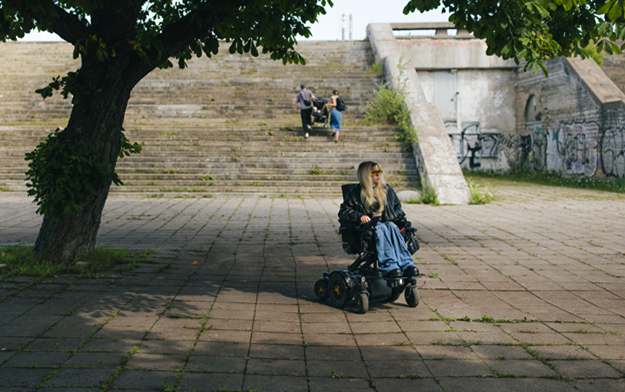
Wheels4Wheels: Bolt and Serviceplan Turn Everyday Scooter Rides into Open Accessibility Data
Bolt repurposes everyday scooter rides to map street-level surface quality, creating open data that can help cities, developers and navigation platforms
Sep. 18, 2026
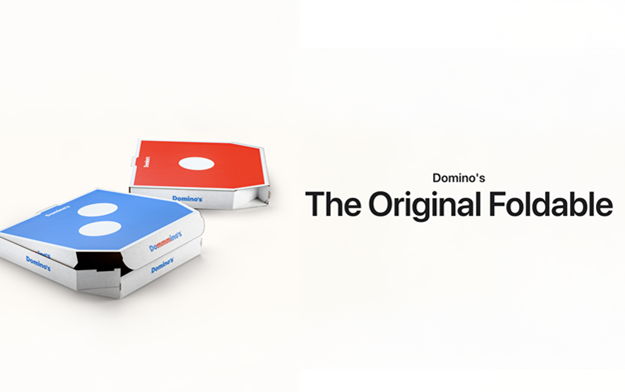
Domino's Pizza Was Foldable Before it Was a Feature
For years, Domino’s Pizza boxes have arrived flat before being folded, unfolded, opened and closed every day to carry what remains, to this day, one of the most popular features around: a pizza